
Body Fat Calculator vs BMI Calculator: Which One Should You Trust?
If you've ever compared your BMI to your body fat percentage, you know they don't always match. Here is which number actually matters for your health.
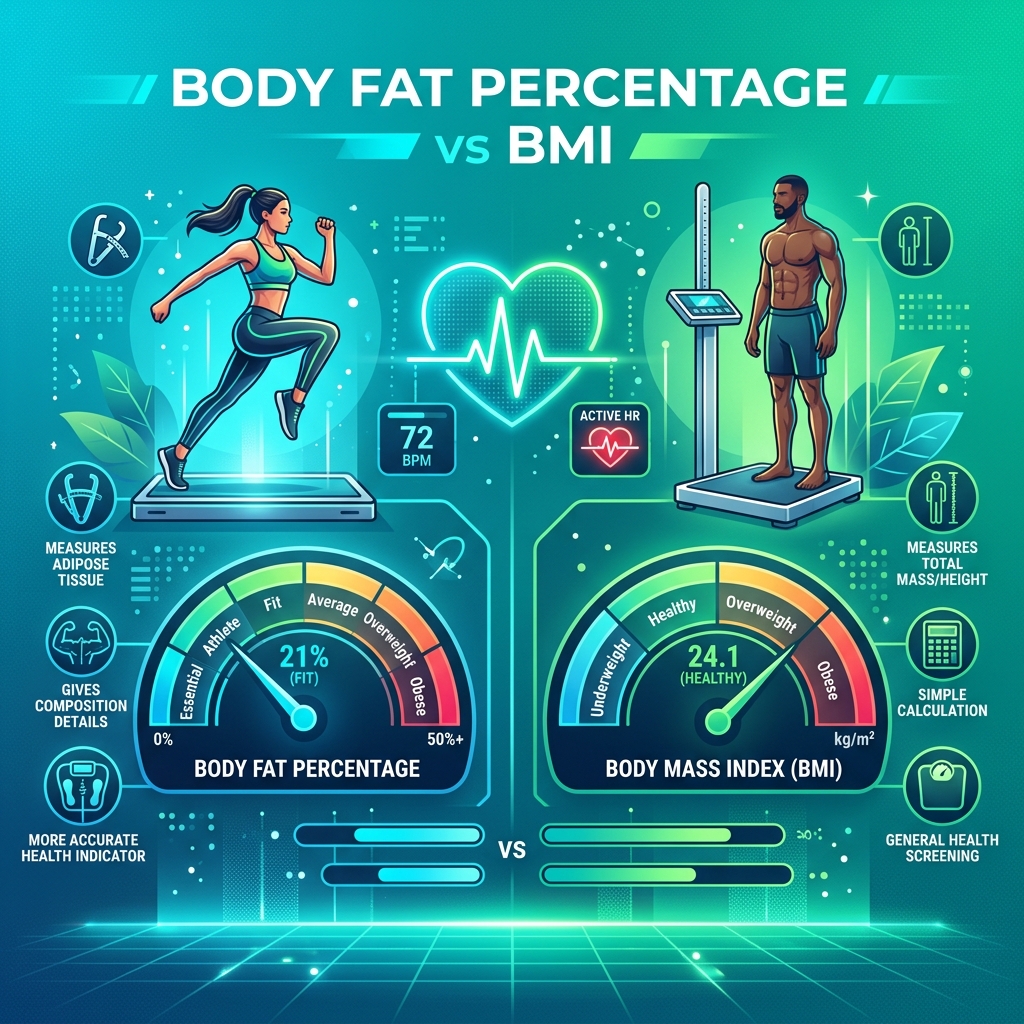
If you've ever compared your BMI (Body Mass Index) to your body fat percentage, you may have noticed they don't always tell the same story. Someone with a "normal" BMI can have a high body fat percentage, while a muscular athlete can show up as "overweight" on the BMI scale despite having very low body fat. So which number should you actually pay attention to?
The short answer: BMI is a quick screening tool based on height and weight, while a body fat calculator estimates the actual proportion of fat versus lean mass in your body — and for most people, body fat percentage gives a more meaningful picture of health and fitness. Neither tool is perfect on its own, and understanding what each one measures (and where it falls short) helps you interpret your results correctly.
This guide compares both methods in detail and shows you how to check your own numbers using CalQora's BMI calculator and CalQora's body fat calculator.
What Is BMI?
BMI is calculated using a simple formula based on your height and weight:BMI = weight (kg) ÷ height (m)²
The result places you into a category:
- Underweight: below 18.5
- Normal weight: 18.5–24.9
- Overweight: 25–29.9
- Obese: 30 and above
BMI was originally developed in the 19th century as a population-level statistical tool, not an individual diagnostic measure. It's still widely used today by doctors, insurers, and public health bodies — including the NHS in the UK and the CDC in the USA — largely because it's fast, free, and requires no special equipment.
What Is Body Fat Percentage?
Body fat percentage measures how much of your total body weight is made up of fat, as opposed to muscle, bone, organs, and water. It's typically estimated using:
- Skinfold caliper measurements
- Bioelectrical impedance scales
- Waist-to-height or waist-to-hip ratio formulas
- DEXA scans (the clinical gold standard, though not typically available for home use)
Unlike BMI, body fat percentage distinguishes between fat mass and lean mass, which is why it's generally considered a more accurate reflection of body composition and overall health risk.
BMI vs Body Fat Percentage: Key Differences
| Factor | BMI | Body Fat Percentage |
|---|---|---|
| What it measures | Weight relative to height | Proportion of fat vs lean mass |
| Accounts for muscle mass? | No | Yes |
| Equipment needed | None (height & weight only) | Calipers, scale, or formula-based estimate |
| Accuracy for athletes | Often misleading | More reliable |
| Ease of use | Very easy | Slightly more involved |
| Used by health bodies | Widely (NHS, CDC, WHO) | Increasingly, alongside BMI |
Where BMI Falls Short
BMI has well-documented limitations, which is why health professionals increasingly use it alongside other measurements rather than in isolation:
- It doesn't distinguish muscle from fat. A bodybuilder and someone with low muscle mass but the same height and weight will show identical BMI results, despite very different body compositions.
- It doesn't account for fat distribution. Two people with the same BMI can have very different health risks depending on whether fat is stored around the waist (higher risk) or hips (lower risk).
- It doesn't adjust for age, sex, or ethnicity, even though body composition naturally varies across these factors.
- It can misclassify very fit or very frail individuals, labeling athletes as "overweight" and underweight elderly people as "normal."
Where Body Fat Percentage Falls Short
Body fat calculators aren't perfect either:
- Home methods are estimates, not precise measurements. Bioelectrical impedance scales and formula-based calculators can vary by several percentage points depending on hydration levels and time of day.
- Consistency matters more than a single reading. A single body fat percentage reading is less useful than tracking the trend over weeks or months under similar conditions.
- Clinical-grade accuracy (DEXA scans) isn't accessible to everyone, since it typically requires a medical or specialized fitness facility.
Healthy Ranges for Reference
General body fat percentage ranges commonly referenced by fitness and health organizations:
| Category | Men | Women |
|---|---|---|
| Essential fat | 2–5% | 10–13% |
| Athletes | 6–13% | 14–20% |
| Fitness | 14–17% | 21–24% |
| Average | 18–24% | 25–31% |
| Obese | 25%+ | 32%+ |
These ranges are general reference points, not individual prescriptions. Where you fall within a healthy range depends on age, genetics, and personal health history, which is why it's worth discussing your specific numbers with a doctor or qualified health professional rather than relying on a single calculator result.
So Which Should You Use: BMI or Body Fat?
- Use BMI as a quick, free, first-pass screening tool, especially for tracking general population health trends or getting a rough baseline.
- Use body fat percentage when you want a clearer picture of body composition, particularly if you're physically active, building muscle, or your BMI result seems inconsistent with how you look and feel.
- Use both together for the most complete picture. A high BMI with a normal body fat percentage may indicate high muscle mass rather than excess fat, while a normal BMI with a high body fat percentage (sometimes called "skinny fat") can indicate health risks that BMI alone would miss.
How to Check Both Numbers with CalQora
- Enter your height and weight into CalQora's BMI calculator for an instant BMI category result.
- Enter your measurements (or use the impedance/formula-based method) in CalQora's body fat calculator to estimate your body fat percentage.
- Compare both results side by side to see whether they tell a consistent story or highlight a gap worth understanding further.
- Track changes over time rather than fixating on a single reading, since both measurements naturally fluctuate.
This article is for general information and educational purposes only. Body metrics and ideal compositions vary widely by individual factors. Always seek the advice of a qualified healthcare provider before initiating new diet or training regimens.